
Initial share sales are set to dazzle the Dalal Street in 2022 too as companies are expected to garner up to Rs 1.5 lakh crore in the New Year, continuing with the bullish momentum after 2021 turned out to be the best IPO year in two decades for the Indian market. Excessive liquidity and increased retail investor participation ensured a persistent euphoria in the Initial Public Offer (IPO) space wherein companies mopped up more than Rs 1.2 lakh crore this year even as pandemic gloom shadowed the broader economy. In 2022, the higher amount of funds through the primary market will be largely driven by the mega IPO of state-owned Life Insurance Corp (LIC).
"We see the Indian economy rebounding from our projected 6.1 per cent growth this fiscal year to something like 7 per cent in the next fiscal year (2020). We see the factors that will support growth, including monetary policy stimulus, working their way through the pipeline," Jonathan Ostry, Deputy Director, Asia Pacific Department at the IMF, told reporters.

Unveiling his infrastructure conglomerate's green vision, billionaire Gautam Adani on Tuesday said his group will invest $20 billion over the next 10 years in renewable energy generation and component manufacturing and will produce the world's cheapest green electron. The port-to-energy conglomerate plans to triple its renewable power generation capacity over the next four years, foray into green hydrogen production, power all data centres with renewable energy, turn its ports into net carbon zero by 2025, and plans to spend over 75 per cent of capital expenditure until 2025 in green technologies, he said. Speaking at JP Morgan India Investor Summit, Adani Group chairman said the USD 20 billion investment will be in renewable energy generation, component manufacturing, transmission and distribution.

M&M was the top loser in the Sensex pack, shedding over 2 per cent, followed by Dr Reddy's Bharti Airtel, Tech Mahindra, HUL, ICICI Bank and Infosys. NSE Nifty dropped 64.80 points to 14,341.35.

With the rise in interest rates, bond yields have been on the rise; this will dent banks' treasury profits. Also, many retail borrowers may find it difficult to service their loans when the loan rates rise, points out Tamal Bandyopadhyay.

As per a Knight Frank FICCI Naredco report, a majority 69% of the stakeholders say that the residential sales will remain tepid or may even go down further in the coming six months.

Among the Sensex stocks, HDFC emerged as the top gainer, rising by 2.06 per cent, followed by Axis Bank, Maruti, Reliance, Power Grid and Tata Steel.

During 2019-20, the number of net new subscribers rose to 78.58 lakh as compared to 61.12 lakh in the preceding fiscal.

Tamil Nadu has cornered around 18.63 per cent of the fresh investments in Q1FY21 and topped the list of state-wise investments. These investments should help create over 67,212 jobs.

After the hit of the pandemic, India Inc is now worried about the adverse impact of inflation and higher commodity prices on their revenues and margins. The inflation scare is the strongest among manufacturers of consumer goods such as automobiles, consumer durables, and fast-moving capital goods (FMCG). Companies across sectors fear they will not be able to pass on the hike in input costs to their consumers due to weak demand, which, in turn, would lead to a hit on margins and profitability in the forthcoming quarters.

Equity benchmarks Sensex and Nifty ended marginally lower on Tuesday as investors booked profits at higher levels amid a mixed trend in global markets.

Only one of the three drivers of the economy has performed in the way it should: government spending grew at 15.6 per cent, reports Abhishek Waghmare.
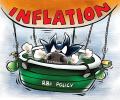
The Reserve Bank of India on Friday raised the retail inflation forecast for 2021-22 to 5.7 per cent due to supply side constraints, high crude oil and raw materials cost. The RBI in June had pegged the retail inflation estimate at 5.1 per cent for the current financial year. The RBI has the mandate to keep inflation in a band of 2-4 per cent, with a tolerance level of 2 per cent on either side.
Property buyers fund the project cost and the entire debt and entire equity servicing, and yet, have no locus standi in the IBC process, points out Debashis Basu.

Unlike the earlier experience post the global financial crisis, where nearly 90 per cent of the restructuring happened in the corporate loans, the non-corporate segment, which includes small businesses, agricultural loans and retail lending, will account for a higher share this time.

Of the 59 IPOs for which the data is available, 36 IPOs received mega responses of more than 10x (of which, six IPOs more than 100x), while eight IPOs were oversubscribed more than 3x.

At the same time, the Cabinet approved reducing government's stake in select PSUs such as IOC to below 51 per cent while continuing to retain management control.

After selling brands like Pulsar, Boxer, Platina and RE in over 70 countries, Bajaj Auto plans to enter Thailand this year followed by Brazil next year.

You will need a sharper eye for stock picking and a greater appetite for risk than most retail investors possess, recommends T N Ninan.

Stock market minnows put up a stellar show in 2021 giving returns of up to 60 per cent amid Dalal Street dream run and are likely to continue sailing northwards in the New Year too. Trumping pandemic-induced uncertainties, the Indian equity market posted stunning gains this year achieving several feats and smaller stocks benefited the most from the strong momentum. From reaching the momentous 50,000-mark in January to scaling 61,000-level in October, the BSE Sensex had an epic journey this year.

The deal street has come out of the record lows in the pandemic-washed out June quarter with transaction value growing almost 6 per cent to $21.64 billion in the July-September quarter, thanks to a string of equity sales by Reliance in its telecom and retail arms, says a report.

With its 10,527 cases, Mumbai now accounts for almost 63.81 per cent of the total 16,758 cases in Maharashtra.

ONGC was the top loser in the Sensex pack, slumping over 4 per cent, followed by NTPC, Kotak Bank, Titan, Bharti Airtel and PowerGrid. On the other hand, IndusInd Bank rallied over 6 per cent.

British Prime Minister Boris Johnson, who landed in Ahmedabad on Thursday morning on a two-day India visit, was accorded a grand welcome at the airport in Ahmedabad. Soon after, he visited Sabarmati Ashram in the company of Gujarat Chief Minister Bhupesh Patel.

We understand the electoral compulsions, the desperate need for the BJP to have at least 50 per cent of the Hindus vote for them in Uttar Pradesh in a few months. For that, you need polarisation, put your own Muslim compatriots on the 'other' side. This is how your domestic politics runs contrary to your national, strategic interest, warns Shekhar Gupta.
The S&P BSE 500 index, which accounts for 94% market capitalisation of BSE listed companies, has gained 45% from its March 24 low. However, out of the BSE 500 index stocks, 225 have underperformed the index by gaining less than the broader index during this period.

Investors became richer by over Rs 6.34 lakh crore on Monday as markets gave a big shout-out to the Budget 2021-22, which analysts termed as 'unprecedented' against the backdrop of the pandemic-induced slowdown. Cheering the Budget proposals, the BSE benchmark Sensex zoomed 2,314.84 points or 5 per cent to close at 48,600.61. During the day, it jumped 2,478.63 points to 48,764.40. This was the best Budget-day gain for the markets since 1997, analysts said. Following the extremely positive market sentiment, the market capitalisation of BSE-listed companies rallied Rs 6,34,069.67 crore to Rs 1,92,46,713.70 crore.
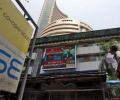
Hero MotoCorp was the top gainer in the Sensex pack, spurting 4.46 per cent. IndusInd Bank, Tata Motors, Vedanta, SBI, M&M, Sun Pharma, Tata Steel, HDFC and HDFC Bank too rose up to 3.63 per cent.

Housing sales mostly declined during the first and the second wave of the coronavirus pandemic but prices did not fall in most of the cities but rather increased in some cities, according to the Economic Survey 2021-22. The pre-Budget document also highlighted that the housing demand recovered after both the waves on the back of pent up demand, low interest rates on home loans and reduction in stamp duty by some states. The survey has analysed the National Housing Bank's data on change in housing transactions in Q1FY21 (first COVID-19 wave) and Q1FY22 (second COVID-19 wave) over the pre-pandemic levels of Q1FY20. It also looked into change in housing prices index during this period.

In 2019 investors backed some of the major online healthcare and pharmacy retailers, with PharmEasy leading the deal list. The firm raised funds through the year to bring in around $220 million and the round is yet to be concluded, according to Venture Intelligence data.

The total AUM rose 40 per cent or Rs 6.3 lakh crore, to Rs 23 lakh crore at the end of November.

The online pharmacy market, which was worth about $512 million in 2018, is growing at a CAGR of 63 per cent and is expected to hit overall revenues of over $3.6 billion by 2022.

As many as 29,557 COVID-19 patients have recuperated in the past 24 hours.

Telecom regulator TRAI on Tuesday released a detailed consultation paper to discuss threadbare the modalities for auction of spectrum across multiple bands, including pricing, quantum and other conditions -- preparing the groundwork for 5G auctions slated for next year. Trai's comprehensive consultation paper runs into 207 pages and throws up 74 questions for industry-wide discussion, touching on crucial aspects like valuation and reserve price of spectrum, including 5G, quantum of spectrum, block size, eligibility conditions for participation in auction, roll-out obligations, spectrum cap, and surrender of spectrum. Norms will also be worked out for new frequencies such as 526-698 MHz and millimetre band, that is 24.25 - 28.5 GHz, in addition to bands such as 700 MHz, 800 MHz, 900 MHz, 1800 MHz, 2100 MHz, 2300 MHz, 2500 MHz, 3300-3670 MHz.

The agency attributed the sharp revision to various high-frequency indicators showing a softness and partly blamed the same to reforms like GST, real estate regulation, and the bankruptcy code which are still a "drag" on the economy.
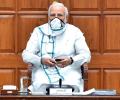
Since its launch in late March after India went into a lockdown, concerns about transparency have been expressed about the PM-CARES Fund

Mid- and small-cap indices have outperformed the frontline benchmarks - the S&P BSE Sensex (up around 10 per cent) and the Nifty50 (13 per cent) - in the first half of calendar year 2021 (H1-CY21) by rallying 26 per cent and 39 per cent, respectively. The trend, analysts believe, is likely to continue in H2-CY21 as well. The outperformance in H1-CY21 comes on the back of improved earnings and strong inflows from the foreign portfolio investors (FPIs) in Indian equities. However, good monsoon so far, gradual opening up of the economy and the pick-up in the pace of vaccination provides support to the market.

We'll need to wait a couple of years to see how many restructured loans turn bad and whether some banks fall victim to their obsession for growth, explains Tamal Bandyopadhyay.

Low home loan rates by banks could put large players in an advantageous position over smaller non-bank players, believe analysts.

The states and UTs having a recovery rate higher than the national average include Ladakh (85.45 per cent), Delhi (79.98 per cent), Uttarakhand (78.77 per cent), Chhattisgarh (77.68 per cent), Himachal Pradesh (76.59 per cent), Haryana (75.25 per cent), Chandigarh (74.6 per cent), Rajasthan (74.22 per cent), Madhya Pradesh (73.03 per cent) and Gujarat (69.73 per cent).
